

A little garlic story to get you in the mood.
A Flair for Drama
Garlic has always had a flair for drama. Not in the pan, that comes later, but in the stories people told when the sun went down and the air felt a little too still.
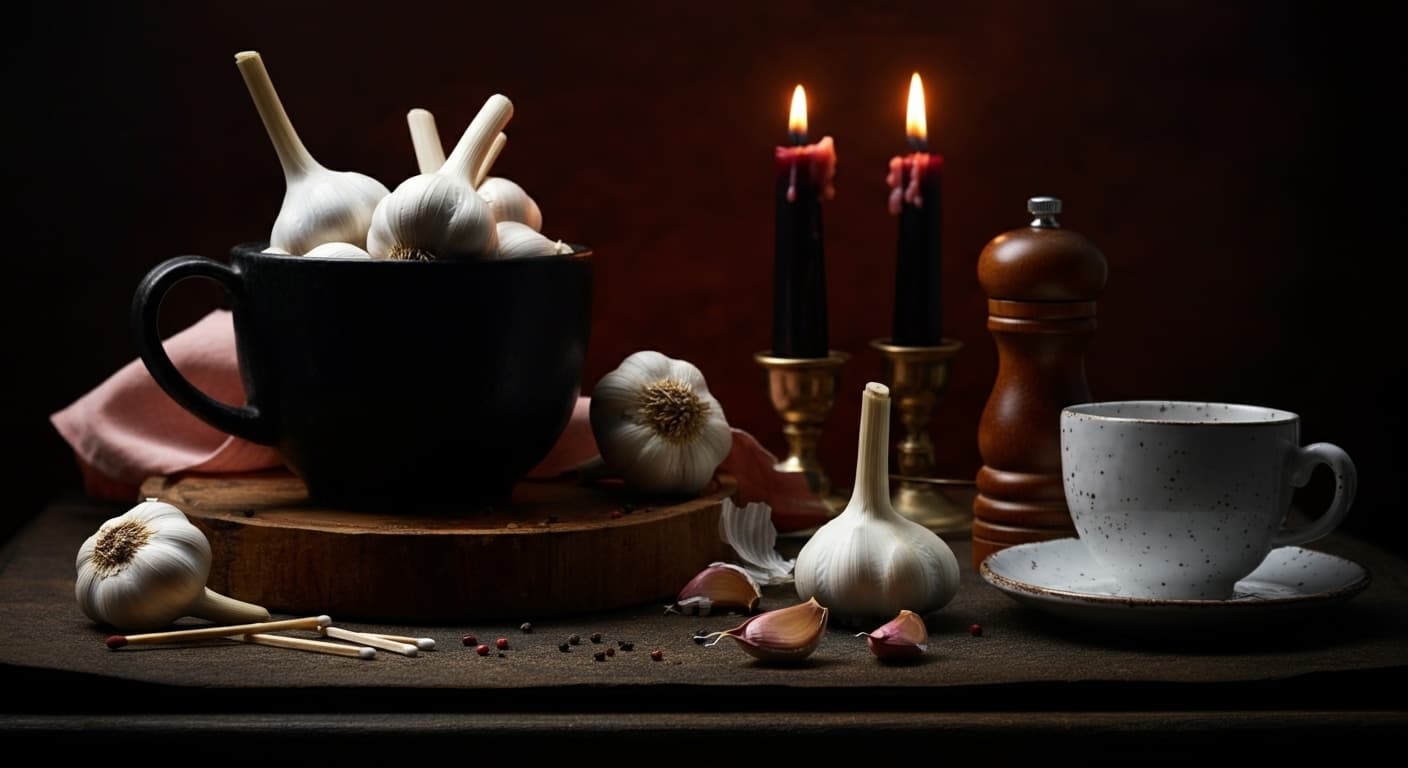
Long before garlic bread and pasta sauces, cloves were being pressed into doorframes, tucked into pockets, and hung in thick braids by the entrance of homes.
Why garlic? Why this sharp, stubborn little bulb? And how did it end up as the unofficial bodyguard against vampires? To answer that, you have to follow garlic through centuries of folklore, disease, and a very human need to feel safe when nothing quite makes sense.
Before Vampires Had a Weakness
Garlic did not become famous because of vampires. It was already well established as something powerful. Across ancient Egypt, Greece, and Rome, garlic was used for strength, endurance, and protection. Workers ate it, soldiers carried it, and households relied on it.
When something had such a strong smell and presence, people assumed it must be doing something important. Imagine living in a time where illness appeared suddenly and spread without warning. No microscopes, no explanations, just symptoms and fear. What would you trust? Something you can smell, taste, and feel working immediately.
Garlic fit perfectly into that role. It became a natural protector against evil spirits, bad energy, and unexplained sickness. People began placing garlic near windows and doors, creating a barrier between the known and the unknown. If something invisible was causing harm, garlic was ready to stand in its way. By the time vampire legends began circulating, garlic had already earned a reputation as a reliable defender. It was simply waiting for a story dramatic enough to match its intensity.
The Birth of Vampire Legends
The connection between garlic and vampires truly took shape in Eastern Europe, particularly in regions like Transylvania. This is where vampire folklore grew from whispers into something far more vivid. Communities began noticing strange and unsettling patterns.
People would fall ill with symptoms that seemed almost unnatural. Pale skin, weakness, weight loss, and a slow decline that affected entire households. Tuberculosis was one of the most common culprits, though at the time it had no clear explanation. What did it look like to those experiencing it? Someone growing weaker as if something was feeding on them. Family members following the same path. Graves disturbed. Bodies behaving in ways that did not align with expectations of decay. It is not hard to see how the idea of a vampire began to take hold.
Now bring garlic back into the scene. Garlic was already used as a remedy for illness and believed to strengthen the body. When sickness appeared, garlic appeared with it. Homes filled with its scent. Cloves placed near beds, windows, and doors. Over time, a pattern formed in the minds of those living through it. If garlic was present when illness was fought, perhaps it was also protecting against whatever caused it. The unseen threat gained a name, the vampire, and garlic became its natural enemy.
From Folklore to Dracula and Beyond
Garlic might have remained a regional tradition if not for literature. In 1897, Bram Stoker published Dracula, bringing vampire folklore to a global audience. Within its pages, garlic was used as a form of protection against Count Dracula, particularly in the case of Lucy, where it was treated almost like a medical necessity.
This moment changed everything. Garlic was no longer just a rural practice or a whispered superstition. It became a defining element of vampire mythology. Readers embraced it, and the image spread rapidly across cultures.
So why has this association lasted so long? Perhaps because some things resist explanation entirely. Garlic is simple, ancient, and familiar — yet something about it has made people reach for it in moments of real fear, across cultures that never spoke to one another, across centuries that had nothing in common. That kind of instinct does not come from stories alone. It comes from somewhere older. Whatever was moving through those Eastern European villages at night, whatever drained the colour from the living and disturbed the resting dead, garlic was there, every time. Make of that what you will. Next time you cook with it, you might just find yourself wondering what it is, exactly, that you are keeping out.